The kitchen, the vibrant heart of every home, often generates a symphony of aromas and a whirlwind of activity. Yet, amidst the culinary creativity, smoke, steam, grease, and odors can quickly accumulate, compromising both air quality and comfort. This is where a range hood becomes indispensable. Designed to extract airborne contaminants, this crucial appliance ensures a fresh, clean, and healthy cooking environment. However, simply installing a range hood isn’t enough; consistent care is paramount. This comprehensive guide will equip you with the essential knowledge, from understanding different types to mastering maintenance, ensuring your range hood performs optimally and efficiently for years to come.
Understanding Common Range Hood Types
Choosing the right range hood is the first step toward a functional kitchen. Each type offers distinct advantages, catering to various kitchen layouts and ventilation needs. Understanding these differences will help you appreciate how your specific model operates and what maintenance it might require.
The primary distinction lies between ducted and ductless (or recirculating) range hoods. Ducted models are generally considered more effective as they vent smoke, steam, and grease directly outside your home through a system of ducts. This ensures superior air purification, reduced noise levels, and less frequent filter replacements, making them ideal for avid cooks and larger kitchens. Conversely, ductless range hoods filter the air using charcoal or carbon filters before recirculating it back into the kitchen. While easier and more flexible to install, especially in apartments or homes without existing ductwork, they are typically less powerful and require regular filter changes to maintain effectiveness. For browse all kitchen ventilation articles on this site.
Beyond ventilation type, range hoods also come in various mounting styles:
- Under-cabinet hoods fit snugly beneath your kitchen cabinets, offering a compact and streamlined look. They are an excellent choice for maximizing space.
- Wall-mount hoods are mounted directly onto the wall above the cooktop, serving as a prominent design feature. These often come with powerful extraction capabilities.
- Island hoods are specifically designed for cooktops located on a kitchen island, hanging from the ceiling to capture fumes from all sides. They often become a focal point in open-plan kitchens.
- Built-in or Insert hoods integrate seamlessly into custom cabinetry, providing a sophisticated, almost invisible ventilation solution for a cohesive kitchen aesthetic.
- Downdraft vent hoods rise from behind the cooktop when in use, pulling smoke and steam downwards. These are perfect for minimalist designs where traditional overhead hoods might obstruct views.
Each type, whether ducted or ductless, under-cabinet or island, plays a vital role in maintaining kitchen air quality. Knowing your range hood’s design is the foundation for effective care and troubleshooting.
Your Comprehensive Guide to Selecting the Perfect Range Hood
Selecting a range hood involves more than just aesthetics; it’s about matching its capabilities to your cooking habits and kitchen design. From suction power to noise levels, every detail contributes to its overall effectiveness.
Suction Power (CFM)
|
Our Picks for the Best Range Hood in 2026
As an Amazon Associate I earn from qualifying purchases.
|
||
| Num | Product | Action |
|---|---|---|
| 1 | Empava Wall Mount Range Hood 30 Inch, Ducted/Ductless Kitchen Exhaust Stove Vent with Modern Style, 400CFM, 3-Speed, Touch Control, Timer, LED Lights, Stainless Steel (Charcoal-Filter Sold Separately) |

|
| 2 | Broan-NuTone BCSQ130SS Three-Speed Glacier Under-Cabinet Range Hood with LED Lights ADA Capable, 1.5 Sones, 375 Max Blower CFM, 30-Inch, Stainless Steel |
|
| 3 | AAOBOSI Range Hood 30 inch Under Cabinet,800-CFM Gesture Sensing/Touch Control/Motor Upgrade Low Noise,3 Speed Range Hood with LED Lights Exhaust Fan, Stainless Steel Kitchen Vent Hood |
|
| 4 | Wall Mount Range Hood 30 inch with Ducted/Ductless Convertible Duct, Stainless Steel Chimney-Style Over Stove Vent Hood with LED Light, 3 Speed Exhaust Fan, 450 CFM |
|
| 5 | COSMO COS-5MU30 30 in. Delta Collection Ducted Under Cabinet Range Hood, Button Controls, Reusable Filters, LED Lights, Stainless Steel |
|
| 6 | AMZCHEF Under Cabinet Range Hood 30 Inch, 750CFM Stainless Steel Kitchen Stove Vent Hood 3 Speed Exhaust Fan Touch/Remote/Gesture Control LED lights Time Setting Dishwasher-Safe Baffle Filters |
|
| 7 | VIKIO HOME Wall Mount Range Hood 30 inch, 580 CFM, Ducted/Ductless Convertible, Stainless Steel Kitchen Vent Hood with 3-Speed Fan and LED Lights |
|
| 8 | COSMO COS-63175S 30 in. Vista Collection 380 CFM Ducted Wall Mount Range Hood, Touch Controls, LED Lights, Stainless Steel |
|
| 9 | Empava Ductless/Ducted Range Hood Under Cabinet 30 Inch, Touch Control, 300 CFM Plug in, Stainless Steel |
|
| 10 | Range Hood 30inch Under Cabinet, 900CFM Stainless Steel Kitchen Vent Hood with Gesture/Touch Control and Permanent Stainless Steel Filters, Ducted Vent, Top and Rear Vents |
|
The effectiveness of a range hood is largely determined by its Cubic Feet per Minute (CFM) rating, which indicates the volume of air it can move per minute. For kitchens with gas ranges or those engaging in heavy-duty cooking like frying and stir-frying, a higher CFM is crucial to efficiently remove smoke, steam, and odors. A general guideline suggests at least 100 CFM for every 10,000 BTUs of your gas range, or 100 CFM for every 10 linear inches of your electric cooktop. However, it’s essential to balance powerful extraction with energy efficiency, as an overly powerful hood can create negative air pressure in your home. Consulting with a professional can help you determine the ideal CFM for your specific kitchen size and cooking frequency.
Noise Level (Sones)
Nobody wants a range hood that sounds like a jet engine. The noise level, measured in sones, is a critical factor, especially in open-plan kitchens or if you spend a lot of time cooking. A lower sone rating indicates quieter operation. Ducted range hoods generally operate more quietly than their ductless counterparts because their motors are often located outside the living space or within insulated ductwork. Look for models with variable fan speeds, allowing you to use lower, quieter settings for light cooking and reserving higher speeds for more intense culinary tasks.
Dimensions and Installation
Proper sizing is paramount for optimal performance. Your range hood should ideally be at least as wide as your cooktop, with an additional 3-inch overhang on each side to ensure comprehensive capture of cooking fumes. Common sizes typically range from 30 to 36 inches. Installation height is also crucial; for electric cooktops, position the hood 20 to 24 inches above the surface, while for gas cooktops, it should be 24 to 30 inches above. Always adhere to the manufacturer’s specific recommendations for mounting height to maximize efficiency and safety. Consider whether you will vent through a wall, ceiling, or roof, as this impacts installation complexity and cost.
Material Choices
Range hoods are commonly crafted from materials like stainless steel or tempered glass. Stainless steel offers durability, a modern aesthetic, and is relatively easy to clean, though it can show fingerprints and smudges. Tempered glass often complements contemporary kitchen designs, providing a sleek, reflective surface that is also simple to wipe down. When choosing, prioritize materials that are resistant to grease buildup and corrosion, ensuring long-term aesthetics and functionality.
Key Features to Consider
Modern range hoods come equipped with a variety of features designed to enhance convenience and performance:
- Multiple Fan Speeds allow you to adjust ventilation based on cooking intensity.
- Built-in Lighting, often LED or halogen, illuminates your cooktop for better visibility.
- Control Panels range from simple push buttons to sleek touch controls, remote operation, motion activation, and even Wi-Fi-enabled smart features for seamless integration into your smart home.
- Dishwasher-Safe Filters significantly simplify cleaning and maintenance.
- Heat Sensors can automatically activate the fan when temperatures rise, providing hands-free operation.
Consider which features align best with your lifestyle and cooking frequency.
Reputable Brands in the Market
The market offers a wide array of reputable range hood brands, each known for specific strengths. ZLINE is often lauded for its powerful yet quiet motors, durable materials, and a lifetime motor warranty, making it a top choice for overall value. Victory excels in sleek design and efficient moisture/smoke removal. For quiet operation and robust engineering, Hauslane is a strong contender. Empava combines rigorous technology with style and performance. Other leading brands include Broan-NuTone, known for durability; Zephyr, specializing in high-end, innovative designs; and household names like KitchenAid, GE, and Bosch. Exploring options from these brands can help you find a reliable and high-performing range hood tailored to your needs.
Optimizing Your Range Hood’s Performance with Regular Maintenance
To ensure your range hood continues to effectively clear your kitchen air and extend its lifespan, consistent and correct maintenance is non-negotiable. These essential maintenance tips will keep your appliance in peak condition.
Cleaning and Replacing Filters Regularly
The filters are your range hood’s first line of defense against grease and airborne particles. Neglecting them is the most common cause of reduced efficiency and performance.
- Metal (Aluminum Mesh or Baffle) Filters: For most home cooks, these should be cleaned every 1 to 2 months, or even every 3-4 weeks with heavy usage. Remove them and either wash them in hot, soapy water, scrubbing away grease with a soft brush, or run them through your dishwasher on a gentle cycle. For stubborn grease, soaking them in hot water with a degreaser or baking soda beforehand can work wonders.
- Charcoal Filters (for Ductless Hoods): Unlike metal filters, charcoal filters are not washable and must be replaced. Their lifespan typically ranges from 3 to 6 months, or up to 12 months depending on cooking frequency. Always refer to your manufacturer’s instructions for specific replacement guidelines.
> “Regular filter cleaning is the single most important maintenance task for any range hood. It directly impacts suction power and prevents costly repairs down the line.” – Alex Nguyen, Range Hood Specialist
Wiping Down the Exterior
The exterior of your range hood, whether stainless steel or glass, can quickly accumulate dust, grease, and grime. Wipe it down weekly with a soft cloth and a mild cleaner, such as warm water mixed with dish soap. For stainless steel surfaces, always wipe in the direction of the grain to prevent streaks and maintain its shine. Stainless steel cleaners or a solution of water and white vinegar can also be effective. Avoid abrasive cleaners or harsh scrubbing pads that can scratch or damage the finish.
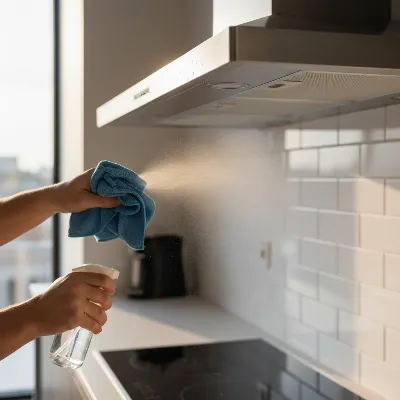 A person carefully wiping the stainless steel exterior of a range hood with a soft cloth and cleaning spray.
Cleaning the Fan Blades and Motor Area
Over time, grease and debris can build up on the fan blades, severely impacting airflow and putting strain on the motor. This area should be cleaned at least annually, or more frequently if you notice reduced performance or increased noise.
Steps for cleaning fan blades:
- Safety First: Always turn off the power to your range hood at the circuit breaker before attempting to clean internal components.
- Access: Remove the filters and, if necessary, the fan cover to expose the blades.
- Clean: Carefully wipe down the fan blades with a cloth soaked in warm, soapy water or a degreaser. Be gentle to avoid bending or damaging the blades. Rinse with a clean, damp cloth and ensure everything is dry before reassembling.
- Motor Area: Inspect the motor housing for any significant grease buildup or damage. Clean with a soft brush or cloth if accessible. For deeper motor issues or wear, professional inspection may be necessary.
Checking and Cleaning the Vent and Ductwork
For ducted range hoods, an obstructed or leaky duct system can drastically reduce efficiency. Annually, inspect the external vent cap to ensure it’s free from debris like leaves, bird nests, or insects. If you notice significantly reduced suction despite clean filters, the internal ductwork might be blocked with grease buildup or foreign objects. Cleaning the ductwork can be complex and may require professional assistance, especially for long or convoluted runs.
Light Bulb Replacement and Inspections
Modern range hoods feature built-in lighting to illuminate your cooking area. Should a light fail, ensure the power is off at the circuit breaker before replacing the bulb. Most covers can be twisted off or unscrewed, allowing access to the bulb. Regular visual inspections of all components, including switches, wiring, and the overall housing, can help identify minor issues before they escalate. If you notice unusual noises, vibrations, or persistent poor airflow, it’s advisable to consult your owner’s manual or a qualified technician.
Troubleshooting Common Range Hood Issues
Even with diligent maintenance, issues can occasionally arise. Knowing how to diagnose and address common range hood problems can save you time and the expense of a service call.
Range Hood Not Working (No Power)
If your range hood completely fails to turn on, start by checking the power supply:
- Check the Plug: Ensure the range hood is securely plugged into a working electrical outlet.
- Circuit Breaker/Fuse: Go to your home’s main electrical panel and check if the circuit breaker for your kitchen or range hood has tripped. Reset it if necessary. If it trips repeatedly, there might be a deeper electrical issue requiring a qualified electrician. For models with an internal fuse, check and replace it if blown.
- Wall Switch/Control Panel: Test the wall switch or control panel. Sometimes, a faulty switch or loose internal wiring can prevent power from reaching the unit. If cleaning the controls doesn’t help, a professional might be needed to inspect the wiring or control board.
Excessive Noise
A noisy range hood can be distracting and often signals an underlying problem:
- Clogged Filters: Heavily clogged filters restrict airflow, forcing the fan motor to work harder and produce more noise. Clean or replace your filters as the first step.
- Loose Fan Blades: Over time, fan blades can become loose or develop grease buildup, causing them to wobble and create rattling or grinding sounds. Turn off power, access the fan, and gently tighten any loose screws or clean the blades.
- Motor Issues: If the noise is persistent and distinct, it could indicate worn motor bearings or a failing motor. This usually requires professional repair or replacement.
- Ductwork Obstructions: Blockages or an improperly installed duct system (too many bends, too small diameter) can cause the fan to strain and become louder.
Weak Suction Power
If your range hood fan is running but not effectively clearing smoke or odors, its suction power may be compromised:
- Dirty Filters: As mentioned, clogged grease filters are the most common culprit for reduced suction. Clean or replace them immediately.
- Blocked Ductwork: For ducted hoods, check the duct system for obstructions. Grease buildup or external debris can significantly impede airflow.
- Incorrect Sizing or Installation: If the hood was improperly sized for your cooktop or installed at an incorrect height, it might never have achieved optimal suction.
- Underpowered Motor: In some cases, especially with older models, the motor may simply not be powerful enough for your cooking habits or kitchen size, or it might be failing.
Grease Dripping from the Hood
This unpleasant issue is almost always a sign of severely neglected filters:
- Overloaded Filters: When grease filters become completely saturated with grease, they can no longer trap new particles, leading to drips. Immediately clean or replace all grease filters.
- Improper Venting: In rare cases, if the hood is not venting properly due to blockages or installation issues, grease might condense and drip.
By understanding these common problems and their solutions, you can often address minor issues independently, keeping your range hood functioning flawlessly.
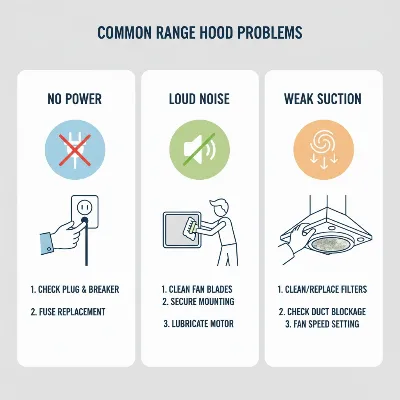 An infographic showing common range hood problems with simple visual troubleshooting icons.
Essential Tips for Effective Range Hood Usage
Beyond maintenance, using your range hood correctly can significantly enhance its performance and prolong its life.
- Activate Before Cooking: Turn on your range hood a few minutes before you start cooking. This creates a powerful airflow pattern that effectively captures rising smoke, steam, and odors from the moment they are produced.
- Match Fan Speed to Cooking: Don’t always default to the highest setting. Use lower speeds for simmering or light cooking, and reserve the higher, more powerful settings for frying, searing, or when cooking pungent foods. This reduces noise, saves energy, and minimizes wear on the motor.
- Utilize All Burners: If cooking on multiple burners, ensure the range hood is wide enough to cover the entire cooking surface and set the fan to an appropriate speed to handle the combined output.
- Leave On After Cooking: Keep the range hood running for 5-10 minutes after you finish cooking. This clears any residual odors, steam, and airborne grease particles, ensuring your kitchen remains fresh.
- Regular Cleaning Schedule: Adhere to a consistent cleaning schedule for filters and exterior surfaces. This preventative measure is far more effective than trying to tackle heavy, caked-on grease.
- Replace Filters Promptly: For ductless models, mark your calendar for charcoal filter replacements. A saturated charcoal filter is ineffective and will simply recirculate dirty air.
By incorporating these simple habits into your cooking routine, you’ll maximize your range hood’s efficiency and maintain a cleaner kitchen with less effort.
Where to Purchase a Reliable Range Hood
When investing in a new range hood, selecting a reputable retailer is as important as choosing the right model. Reliable sources ensure product authenticity, warranty support, and professional advice.
Authorized Dealers and Appliance Stores
Purchasing from authorized dealers or dedicated appliance stores, both physical and online, is often the safest bet. These retailers typically carry a wide range of brands, offer knowledgeable sales staff, and provide crucial after-sales support, including installation services and warranty claims. Major appliance chains and independent kitchen specialists are excellent places to start. They often have display models, allowing you to see and feel the product quality firsthand.
Online Retailers
Many reputable online appliance retailers offer competitive pricing and a vast selection. When buying online, ensure the retailer has a clear return policy, strong customer service reviews, and transparent shipping details. Always confirm that they are an authorized seller for your chosen brand to guarantee warranty validity. Be mindful of potential additional costs for shipping and professional installation.
Considerations for Second-Hand Purchases
While tempting for budget reasons, buying a used range hood carries risks. Always inspect the unit thoroughly for damage, check the motor’s functionality, and inquire about its maintenance history. Ensure all filters and essential components are present and in good condition. Be aware that manufacturer warranties typically do not transfer to second owners, and finding replacement parts for older or discontinued models can be challenging.
Important Budgeting Factors
Beyond the purchase price, consider the following when budgeting for your new range hood:
- Installation Costs: Professional installation is often recommended, especially for ducted or complex models.
- Ductwork: For ducted models, if existing ductwork is insufficient or absent, additional costs for materials and installation will apply.
- Energy Consumption: Factor in the operating costs, especially for higher CFM models used frequently.
- Filter Replacements: For ductless models, the recurring cost of charcoal filter replacements should be part of your long-term budget.
A well-informed purchase from a trusted source, combined with an understanding of associated costs, ensures a satisfying and long-lasting investment in your kitchen’s air quality.
A Quick Glance at Range Hood Price Ranges
Range hood prices vary significantly based on type, brand, features, and materials. Understanding these general price segments can help you set a realistic budget.
- Entry-Level (Under $200 – $400): This category often includes basic under-cabinet or ductless models. They are functional for light cooking and smaller kitchens, offering essential ventilation without advanced features or high CFM. Materials are typically simpler, and noise levels might be higher.
- Mid-Range ($400 – $1,000): This segment offers a broader selection, including more powerful under-cabinet, wall-mount, and some island models. You’ll find better build quality, quieter operation (lower sone ratings), more fan speeds, better lighting, and sometimes smart features or more premium finishes like stainless steel. Both ducted and convertible (ducted/ductless) options are common here.
- High-End ($1,000 – $3,000+): Premium range hoods from top brands, including high-CFM island, professional-style wall-mount, and integrated insert models, fall into this range. Expect superior craftsmanship, ultra-quiet operation, advanced features (e.g., motion sensors, Wi-Fi connectivity, automatic heat sensing), powerful extraction suitable for commercial-grade cooking, and luxurious designs. Materials often include heavy-gauge stainless steel and sophisticated glass elements. Custom-built hoods can exceed this price range.
It’s important to remember that these are general estimates, and prices can fluctuate based on sales, promotions, and specific retailer pricing. Always compare features and specifications across different models within your budget to ensure you’re getting the best value.
The Ultimate Buying Guide for Your Range Hood
Navigating the myriad options for range hoods can feel daunting, but a structured approach ensures you make an informed decision that perfectly suits your home and culinary lifestyle.
Here’s a concise guide to help you make your final selection:
- Assess Your Kitchen Layout: Determine the best mounting style (under-cabinet, wall-mount, island, insert, or downdraft) based on your cooktop’s location and kitchen design.
- Choose Ventilation Type: Decide between ducted (more efficient, quieter, less filter maintenance) or ductless (easier installation, flexible placement, requires regular charcoal filter replacement).
- Calculate CFM Needs: Consider your cooking habits and the BTUs of your range. Aim for higher CFM if you cook frequently, use high heat, or have a gas range.
- Prioritize Noise Level: Look for a low sone rating, especially if you have an open kitchen concept or value a quieter cooking experience.
- Measure for Sizing: Ensure the hood is at least as wide as your cooktop, with a slight overhang for optimal capture. Double-check recommended installation heights.
- Evaluate Materials & Features: Select durable, easy-to-clean materials. Identify essential features like multiple fan speeds, lighting type, and control options (touch, remote, smart capabilities).
- Research Brands: Consider reputable brands known for quality, performance, and warranty. Read reviews and comparisons.
- Set a Realistic Budget: Factor in not just the purchase price, but also installation costs, potential ductwork, and ongoing filter replacement expenses.
- Check for Ease of Maintenance: Look for features that simplify cleaning, such as dishwasher-safe filters and smooth surfaces.
Before finalizing your purchase, ask yourself these crucial questions: Does this range hood effectively meet my cooking needs? Is its design compatible with my kitchen aesthetic? Have I accounted for all installation and long-term maintenance costs? By addressing these points, you’ll confidently choose a range hood that elevates your kitchen experience.
Conclusion
A well-maintained range hood is an invaluable asset in any kitchen, diligently working to keep your cooking space fresh, clean, and free from unwanted smoke, steam, and odors. From understanding the nuances of different types and making an informed purchase, to implementing a routine of essential maintenance, every step contributes to its longevity and efficiency. Regular cleaning of filters, the exterior, and fan components, coupled with prompt troubleshooting of minor issues, ensures peak performance and prevents more significant problems down the line. By dedicating a little time to care, you not only protect your investment but also foster a healthier and more enjoyable environment for all your culinary adventures. So, take charge of your range hood’s well-being—your kitchen will thank you!
What essential maintenance tip has made the biggest difference in your range hood’s performance?
Frequently Asked Questions
How often should I clean my range hood filters?
Metal grease filters should ideally be cleaned every 1 to 2 months for average usage, or every 3-4 weeks for heavy cooking. For ductless range hoods, charcoal filters need replacement every 3 to 6 months, as they are not washable. Consistent cleaning and timely replacement are crucial for maintaining optimal suction and air quality.
Can I put my range hood filters in the dishwasher?
Many metal mesh or baffle filters are dishwasher-safe, which makes cleaning them incredibly convenient. However, always consult your range hood’s owner’s manual to confirm if your specific filters are dishwasher-compatible. If not, they can be effectively cleaned by soaking them in hot, soapy water.
Why is my range hood making a loud noise?
Excessive noise from a range hood can be caused by several factors. The most common culprits include clogged filters restricting airflow, loose fan blades causing vibrations, or issues with the motor itself, such as worn bearings. Obstructions in the ductwork can also force the fan to work harder and produce more sound.
What causes a range hood to lose suction power?
The primary reason for diminished suction power is often dirty or clogged filters that impede airflow. Other factors include blockages within the ductwork (for ducted models), an underpowered motor for the size of the kitchen or cooking habits, or improper installation height above the cooktop. Regular maintenance can usually resolve these issues.
How do I clean a stainless steel range hood without streaks?
To clean a stainless steel range hood without leaving streaks, use a soft microfiber cloth with a mild cleaner specifically designed for stainless steel, or a mixture of warm water and white vinegar. Always wipe in the direction of the grain of the stainless steel to achieve a uniform, streak-free shine. Avoid harsh or abrasive cleaners.
