For most households, range hood baffle filters should be cleaned monthly to maintain optimal performance and hygiene. However, cleaning frequency depends on cooking habits: daily cooks should clean filters weekly or bi-weekly, moderate cooks every one to three months, and light cooks every three to six months. Regular cleaning prevents grease buildup, reduces fire risk, and extends the appliance’s lifespan.
The Vital Role of Your Range Hood Baffle Filters
Baffle filters are robust, often stainless steel, and designed with a series of angled metal channels. Unlike mesh filters that trap grease within fine layers, baffle filters work by forcing grease-laden air to change direction rapidly as it passes through. This action causes grease droplets to condense and stick to the metal blades, effectively separating them from the airstream and draining them into a collection tray. This design makes them incredibly efficient at grease capture and fire suppression, particularly in high-volume cooking environments. While mesh filters, made of thin metal layers, trap grease more directly and often require replacement sooner due to clogging, and charcoal filters absorb odors in ductless hoods, baffle filters are durable, long-lasting, and highly effective, making them a preferred choice for many modern kitchens.
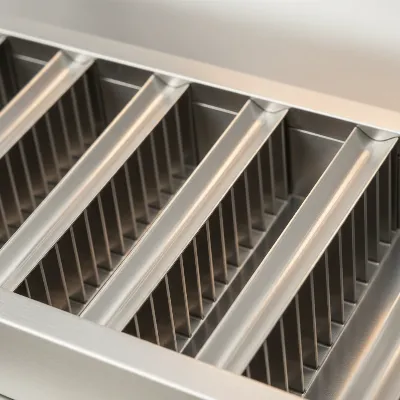 Close-up of a clean range hood baffle filter showing its unique design elements
How Often Should You Clean Your Range Hood Baffle?
Determining the ideal cleaning frequency for your range hood baffle filters isn’t a one-size-fits-all answer; it largely depends on your specific cooking habits. For the average household, cleaning baffle filters monthly is a good baseline to maintain optimal performance and hygiene. However, this schedule needs to be flexible based on your kitchen’s activity.
If you are a daily cook, especially if your meals frequently involve frying, searing, or grilling, your filters will accumulate grease much faster. In such cases, it is highly recommended to clean your baffle filters weekly or at least every two weeks. For moderate cooks who use their stove three to five times a week, a cleaning interval of every one to three months is usually sufficient. If you cook lightly or only occasionally, cleaning your filters every three to six months might be adequate.
Beyond a fixed schedule, visual inspection is your most reliable guide. Take a moment to examine your filters. If they appear visibly dark, sticky, or clogged, or if you can’t easily see light through them, they are saturated and restricting airflow. Immediate cleaning is necessary to restore your hood’s efficiency and prevent potential issues. Listen to your range hood too; if it sounds louder than usual or if smoke and odors linger longer after cooking, these are clear indicators that your filters are overdue for a thorough clean.
Step-by-Step Guide to Cleaning Baffle Filters
Cleaning your range hood baffle filters is a straightforward process that doesn’t require specialized tools or harsh chemicals. It’s a task easily integrated into your regular kitchen maintenance.
Preparation
|
Our Picks for the Best Range Hood in 2026
As an Amazon Associate I earn from qualifying purchases.
|
||
| Num | Product | Action |
|---|---|---|
| 1 | Range Hood 30inch Under Cabinet, 900CFM Stainless Steel Kitchen Vent Hood with Gesture/Touch Control and Permanent Stainless Steel Filters, Ducted Vent, Top and Rear Vents |

|
| 2 | AMZCHEF Under Cabinet Range Hood 30 Inch, 750CFM Stainless Steel Kitchen Stove Vent Hood 3 Speed Exhaust Fan Touch/Remote/Gesture Control LED lights Time Setting Dishwasher-Safe Baffle Filters |
|
| 3 | COSMO COS-5MU30 30 in. Delta Collection Ducted Under Cabinet Range Hood, Button Controls, Reusable Filters, LED Lights, Stainless Steel |
|
| 4 | VIKIO HOME Wall Mount Range Hood 30 inch, 580 CFM, Ducted/Ductless Convertible, Stainless Steel Kitchen Vent Hood with 3-Speed Fan and LED Lights |
|
| 5 | Empava Wall Mount Range Hood 30 Inch, Ducted/Ductless Kitchen Exhaust Stove Vent with Modern Style, 400CFM, 3-Speed, Touch Control, Timer, LED Lights, Stainless Steel (Charcoal-Filter Sold Separately) |
|
| 6 | Empava Ductless/Ducted Range Hood Under Cabinet 30 Inch, Touch Control, 300 CFM Plug in, Stainless Steel |
|
| 7 | Broan-NuTone BCSQ130SS Three-Speed Glacier Under-Cabinet Range Hood with LED Lights ADA Capable, 1.5 Sones, 375 Max Blower CFM, 30-Inch, Stainless Steel |
|
| 8 | AAOBOSI Range Hood 30 inch Under Cabinet,800-CFM Gesture Sensing/Touch Control/Motor Upgrade Low Noise,3 Speed Range Hood with LED Lights Exhaust Fan, Stainless Steel Kitchen Vent Hood |
|
| 9 | COSMO COS-63175S 30 in. Vista Collection 380 CFM Ducted Wall Mount Range Hood, Touch Controls, LED Lights, Stainless Steel |
|
| 10 | Wall Mount Range Hood 30 inch with Ducted/Ductless Convertible Duct, Stainless Steel Chimney-Style Over Stove Vent Hood with LED Light, 3 Speed Exhaust Fan, 450 CFM |
|
Safety should always be your top priority. Before you begin, always turn off the power to your range hood at the circuit breaker or by unplugging it if accessible. This prevents accidental activation during filter removal and cleaning. Gather your materials: hot water, a degreasing dish soap (such as Dawn, Simple Green, or 409), baking soda, and a non-abrasive scrub brush or sponge. A large sink, bucket, or basin will also be helpful for soaking.
Removal
Baffle filters are designed for easy removal. Most models have a small latch, knob, or handle that you can push, lift, or slide to release the filter. Gently pull them down and out. Be mindful that if they are heavily saturated, some grease may drip, so have a paper towel ready. Once removed, you might also find a grease tray or oil tunnel, which should be drained and cleaned regularly as well.
Cleaning Methods
You generally have two effective methods for cleaning baffle filters:
Dishwasher Method
Many stainless steel and aluminum baffle filters are dishwasher safe, offering the most convenient cleaning solution.
- Placement: Place the filters upright in the bottom rack of your dishwasher. Ensure they are positioned so that water jets can reach both sides effectively and avoid overcrowding the machine.
- Cycle: Run a hot water cycle with your standard dishwasher detergent. The hot water and powerful detergents are designed to break down fats and grease.
- Avoid Heated Dry: Opt for an air-dry setting or remove them before the heated drying cycle begins, as excessive heat can potentially cause discoloration, especially with older aluminum filters. While some aluminum filters may dull slightly over time with repeated washes, this is typically cosmetic and doesn’t affect performance.
Hand-Washing Method
For those without a dishwasher, or if you prefer a more hands-on approach, hand-washing is equally effective.
- Materials: You will need very hot water, a generous amount of degreasing dish soap, about half a cup of baking soda, and a soft-bristled brush or sponge.
- Soaking Process: Fill a large sink or basin with very hot water. Add the dish soap and baking soda, stirring until dissolved. Submerge your baffle filters completely in this solution. For stubborn buildup, let them soak for 30 to 60 minutes. The hot, soapy water and baking soda will work together to loosen and break down accumulated grease.
- Scrubbing and Rinsing: After soaking, use your non-abrasive brush or sponge to gently scrub away any remaining grease, food particles, or debris. Pay attention to the channels and crevices. Rinse the filters thoroughly under hot running water, ensuring all soap residue and loosened grease are washed away. A faucet sprayer attachment can be particularly useful here.
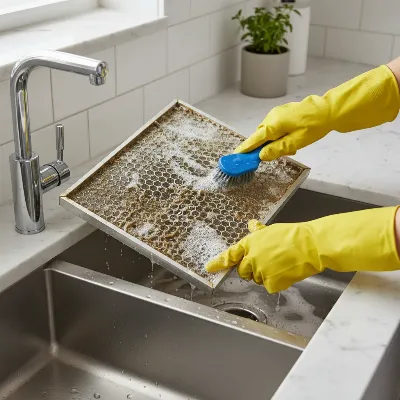 A person hand-washing a greasy range hood baffle filter in a kitchen sink with soapy water
Drying and Reinstallation
After cleaning, it’s crucial to allow the filters to air dry completely before reinstalling them. You can place them on a clean towel or a drying rack. Reassembling wet filters can lead to moisture buildup, which is undesirable. Once thoroughly dry, slide or clip the filters back into their original positions. Ensure they are securely in place before restoring power to your range hood.
What to Avoid
When cleaning your baffle filters, steer clear of abrasive scrubbers, steel wool, or harsh chemicals like bleach. These can scratch, damage, or corrode the filter’s surface, reducing its effectiveness and potentially shortening its lifespan. Stick to mild degreasers and soft cleaning tools.
The Undeniable Benefits of Regular Baffle Cleaning
Consistent cleaning of your range hood baffle filters offers a multitude of benefits that extend far beyond a sparkling appearance:
- Enhanced Airflow and Ventilation: Clean filters allow your range hood to operate at peak efficiency, effectively removing smoke, steam, and cooking odors from your kitchen. This prevents the recirculation of pollutants and ensures proper ventilation.
- Reduced Fire Risk: Grease buildup is highly flammable. Clogged baffle filters can allow grease to accumulate in the ductwork, significantly increasing the risk of a kitchen fire. Regular cleaning dramatically mitigates this hazard, protecting your home and family.
- Improved Air Quality and Odor Elimination: When filters are clean, your hood can effectively capture airborne contaminants and odors, preventing them from lingering in your home. This leads to a fresher, healthier indoor environment, free from persistent cooking smells.
- Extended Range Hood Lifespan and Energy Efficiency: A clogged filter forces your range hood’s motor to work harder to pull air through, leading to increased wear and tear, higher energy consumption, and a shorter appliance lifespan. By keeping filters clean, you reduce strain on the motor, maintain energy efficiency, and avoid costly repairs.
Common Issues and Troubleshooting Dirty Baffle Filters
Ignoring your baffle filters can manifest in several noticeable problems within your kitchen. You might observe reduced suction from your range hood, meaning it’s less effective at clearing smoke and steam. The fan motor might start producing a loud, unusual noise as it struggles against restricted airflow. Persistent lingering smells and smoke after cooking are clear indicators that your filters aren’t doing their job. In severe cases, you might even notice grease dripping from the hood onto your stovetop or countertops, creating a messy and hazardous situation. If you encounter these issues, a thorough cleaning of your baffle filters is usually the first and most effective troubleshooting step. If problems persist after cleaning, or if you suspect a deeper mechanical issue, consider consulting a qualified technician for professional help.
When to Consider Baffle Filter Replacement
While baffle filters are known for their exceptional durability and longevity, capable of lasting several years with proper maintenance, they are not entirely indestructible. Unlike charcoal filters, which require regular replacement because they cannot be cleaned, baffle filters are typically reusable for the life of the range hood. However, you should inspect them periodically for signs of damage such as holes, deterioration, significant warping, or cracks. If a filter becomes structurally compromised, it loses its effectiveness in trapping grease and preventing fire spread. In such rare instances, replacement is necessary to ensure the continued safety and efficiency of your range hood system.
“A well-maintained baffle filter is the cornerstone of a healthy kitchen environment. It’s not just about cleanliness; it’s about optimizing performance and safeguarding against hazards that can arise from neglected grease.”
Conclusion
The baffle filter in your range hood plays an indispensable role in maintaining a clean, safe, and pleasant kitchen. By adhering to a consistent cleaning schedule – typically monthly for average use, or more frequently for heavy cooks – you ensure optimal performance, significantly reduce fire risks, and enhance the overall air quality of your home. to adapt your cleaning frequency to your specific cooking habits and to perform regular visual inspections. A little effort goes a long way in protecting your investment and creating a healthier culinary space. What simple step can you take this week to ensure your range hood is performing at its best?
Frequently Asked Questions
Frequently Asked Questions
Are baffle filters dishwasher safe for easy cleaning?
Yes, most stainless steel and aluminum baffle filters are dishwasher safe. For best results, place them upright in the bottom rack and use a hot water cycle with standard detergent, avoiding the heated dry option to prevent potential discoloration.
What kind of detergent is best for cleaning range hood baffle filters?
For both hand-washing and dishwasher methods, a good quality degreasing dish soap is ideal. For stubborn grease, adding about half a cup of baking soda to hot water can significantly boost cleaning power without using harsh chemicals.
How can I tell if my range hood baffle filter is clogged?
Signs of a clogged baffle filter include reduced suction power, increased noise from the range hood motor, lingering cooking odors and smoke in the kitchen, or visible grease buildup that prevents light from passing through the filter.
How long do baffle filters typically last with regular cleaning?
With proper and consistent cleaning, baffle filters are very durable and can last for many years, often for the entire lifespan of the range hood itself. They typically only need replacement if they become physically damaged or warped.
Is it safe to use abrasive cleaners on baffle filters?
No, it is strongly advised to avoid abrasive brushes, steel wool, or harsh chemicals like bleach. These can scratch, corrode, or damage the filter's surface, compromising its integrity and effectiveness. Stick to soft brushes or sponges and mild degreasing solutions.
How to Clean Range Hood Baffle Filters
Cleaning your range hood baffle filters is a straightforward process that ensures optimal performance and extends the life of your appliance.
Always turn off the power to your range hood at the circuit breaker or by unplugging it. Gather hot water, a degreasing dish soap (like Dawn), baking soda, and a non-abrasive scrub brush or sponge. A large sink or basin will be useful for soaking.
Baffle filters are designed for easy removal, usually with a latch or handle. Gently pull them down and out, being mindful of any dripping grease. You may also find a grease tray that needs draining and cleaning.
For dishwashers, place filters upright in the bottom rack and run a hot water cycle, avoiding heated dry. For hand-washing, submerge filters in very hot water with degreasing soap and baking soda for 30-60 minutes, then scrub with a non-abrasive brush and rinse thoroughly.
Allow the filters to air dry completely on a clean towel or drying rack. Reassembling wet filters can lead to moisture buildup. Once thoroughly dry, slide or clip them back into their original positions and ensure they are secure before restoring power.
When cleaning, never use abrasive scrubbers, steel wool, or harsh chemicals like bleach. These can scratch, damage, or corrode the filter's surface, reducing its effectiveness and lifespan. Stick to mild degreasers and soft cleaning tools.

Fantastic advice! I always just rinsed my filters, but the detailed explanation of how baffle filters separate grease from the airstream really highlighted why a deeper clean is necessary. My range hood is performing so much better, and I feel safer knowing I’m reducing fire risk. Highly recommend this cleaning method.
This was super helpful! I’m a daily cook, so my baffle filters get pretty grimy fast. I’ve been cleaning them bi-weekly now, following the steps here, and it’s made a huge difference. I appreciate understanding how the angled metal channels work to trap grease; it makes me feel more confident about keeping them clean.
I used to dread cleaning my range hood, but this guide made it so much easier. The tip about letting the filters soak in hot, soapy water really helped loosen up all the caked-on grease. My stainless steel baffles look brand new now, and the air quality in my kitchen is noticeably better. Definitely keeping up with this monthly!
The instructions were pretty clear, but I found it a bit of a hassle to get all the grease out of the collection tray. It was messier than I expected, even after soaking. I’m a moderate cook, so I’ll try to stick to cleaning every other month, but I wish there was an easier way to deal with the tray.