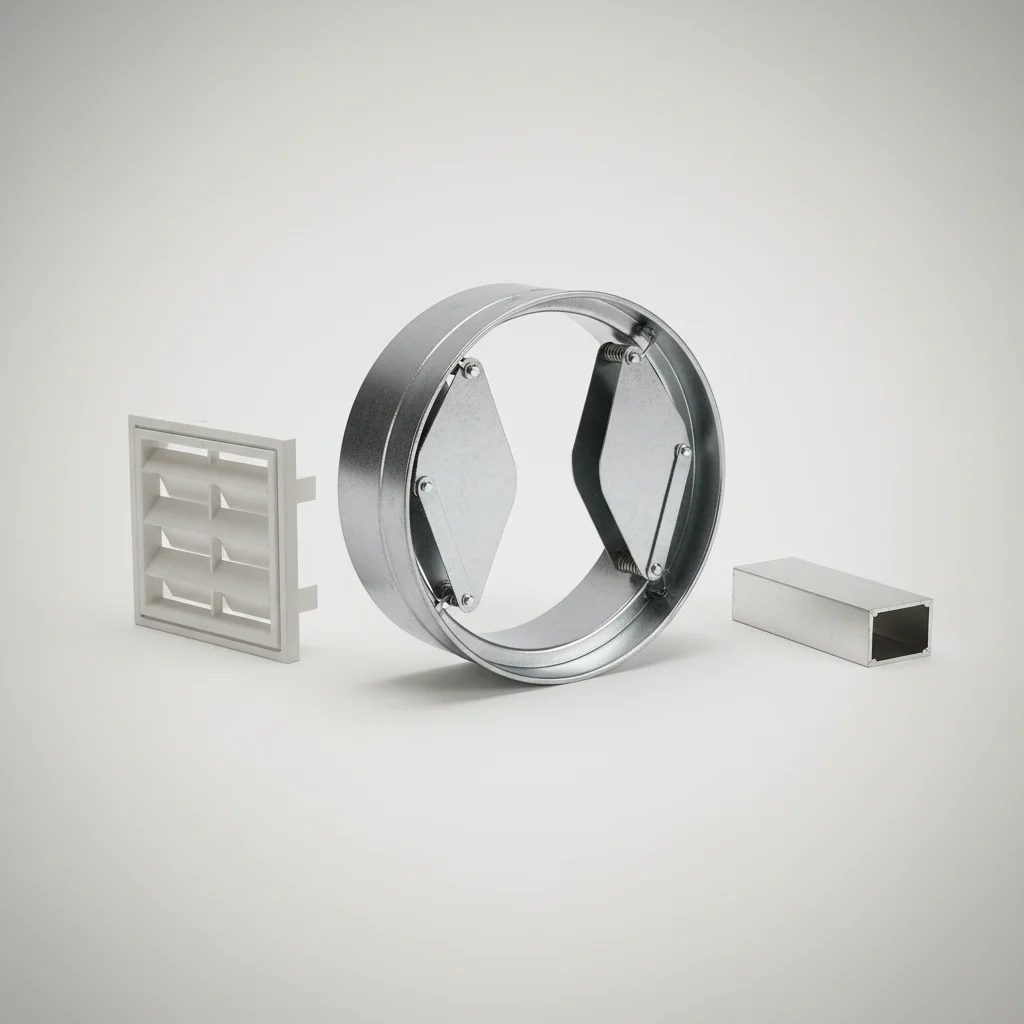
A range hood backdraft damper is a crucial component for preventing unwanted air from entering your kitchen through the ventilation system. You absolutely need one to ensure optimal performance and energy efficiency. These simple devices close automatically when the range hood is not in operation, effectively blocking cold air, odors, and even pests from re-entering your home.
Understanding Backdraft Dampers and Their Function
Backdraft dampers are essentially one-way valves installed within the ductwork of your range hood. When the fan is on, the air pressure pushes the damper open, allowing exhaust air to flow out. When the fan is off, the damper springs or gravity pulls it closed, creating a seal. This mechanism is vital for maintaining indoor air quality and preventing energy loss, especially in colder climates where drafts can significantly impact heating costs. For kitchen ventilation buying guides on this site.
Without a properly functioning backdraft damper, your kitchen can become a conduit for outside air, bringing in dust, pollen, and unpleasant smells. It also means your heated or air-conditioned air can escape through the duct, leading to higher utility bills. Most modern range hoods come with an integrated damper, but older models or custom installations might require a separate purchase and installation.
Types of Backdraft Dampers Available
There are primarily two types of backdraft dampers: butterfly dampers and gravity dampers. Butterfly dampers feature two semi-circular flaps that pivot open and close, often spring-loaded for a tighter seal. Gravity dampers, as the name suggests, rely on gravity to close the flap when the airflow stops. Both types are effective, but butterfly dampers generally offer a more secure seal due to their spring mechanism.
- Butterfly Dampers: Often spring-loaded, providing a tighter seal against backdrafts.
- Gravity Dampers: Rely on gravity to close, simpler in design but can be less effective in certain orientations.
- Inline Dampers: Installed directly within the ductwork, suitable for both new and existing systems.
- Wall Cap Dampers: Integrated into the exterior wall cap, offering protection at the point of exit.
- Roof Cap Dampers: Similar to wall cap dampers but designed for roof penetrations.
Installation Considerations for Optimal Performance
|
Our Picks for the Best Range Hood in 2026
As an Amazon Associate I earn from qualifying purchases.
|
||
| Num | Product | Action |
|---|---|---|
| 1 | Wall Mount Range Hood 30 inch with Ducted/Ductless Convertible Duct, Stainless Steel Chimney-Style Over Stove Vent Hood with LED Light, 3 Speed Exhaust Fan, 450 CFM |

|
| 2 | Empava Ductless/Ducted Range Hood Under Cabinet 30 Inch, Touch Control, 300 CFM Plug in, Stainless Steel |
|
| 3 | VIKIO HOME Wall Mount Range Hood 30 inch, 580 CFM, Ducted/Ductless Convertible, Stainless Steel Kitchen Vent Hood with 3-Speed Fan and LED Lights |
|
| 4 | Range Hood 30inch Under Cabinet, 900CFM Stainless Steel Kitchen Vent Hood with Gesture/Touch Control and Permanent Stainless Steel Filters, Ducted Vent, Top and Rear Vents |
|
| 5 | COSMO COS-63175S 30 in. Vista Collection 380 CFM Ducted Wall Mount Range Hood, Touch Controls, LED Lights, Stainless Steel |
|
| 6 | COSMO COS-5MU30 30 in. Delta Collection Ducted Under Cabinet Range Hood, Button Controls, Reusable Filters, LED Lights, Stainless Steel |
|
| 7 | Empava Wall Mount Range Hood 30 Inch, Ducted/Ductless Kitchen Exhaust Stove Vent with Modern Style, 400CFM, 3-Speed, Touch Control, Timer, LED Lights, Stainless Steel (Charcoal-Filter Sold Separately) |
|
| 8 | AMZCHEF Under Cabinet Range Hood 30 Inch, 750CFM Stainless Steel Kitchen Stove Vent Hood 3 Speed Exhaust Fan Touch/Remote/Gesture Control LED lights Time Setting Dishwasher-Safe Baffle Filters |
|
| 9 | AAOBOSI Range Hood 30 inch Under Cabinet,800-CFM Gesture Sensing/Touch Control/Motor Upgrade Low Noise,3 Speed Range Hood with LED Lights Exhaust Fan, Stainless Steel Kitchen Vent Hood |
|
| 10 | Broan-NuTone BCSQ130SS Three-Speed Glacier Under-Cabinet Range Hood with LED Lights ADA Capable, 1.5 Sones, 375 Max Blower CFM, 30-Inch, Stainless Steel |
|
Proper installation of a backdraft damper is key to its effectiveness. It should be installed as close to the range hood as possible, or within the first few feet of ductwork, to minimize the volume of air that can backflow. Ensure the damper is oriented correctly according to the manufacturer’s instructions, typically with the flaps opening in the direction of airflow. Any obstructions or improper alignment can hinder its operation, leading to drafts and reduced efficiency.
For existing range hoods, you might need to cut into the ductwork to install an inline damper. It’s crucial to use the correct size damper that matches your duct diameter to ensure a snug fit and prevent air leakage around the damper itself. If you’re unsure, consulting with an HVAC professional is always recommended to ensure a secure and effective installation.
Maintenance and Troubleshooting Common Issues
Backdraft dampers are generally low-maintenance, but occasional inspection is advisable. Over time, grease and dust can accumulate on the damper flaps, preventing them from closing completely. This can lead to minor backdrafts and reduced energy efficiency. A simple cleaning with a degreaser can usually resolve this issue. Check for any signs of damage to the flaps or springs, as these can also impair functionality.
If you notice a persistent draft even with a damper installed, it could indicate a problem with the damper itself, or an issue with the ductwork sealing. Ensure all duct connections are properly sealed with mastic or foil tape to prevent air leakage. A well-maintained backdraft damper will significantly contribute to the overall efficiency and comfort of your kitchen ventilation system.
Investing in a high-quality backdraft damper is a small but significant step towards a more comfortable and energy-efficient kitchen. Consider models like thefor robust performance and easy installation. For those seeking integrated solutions, theoffers excellent backdraft protection within its design.

As someone who cooks a lot, I can’t stress enough how important a good backdraft damper is. I used to get all sorts of weird smells drifting back into the house, especially from my neighbor’s cooking. Since installing a proper one-way valve in my ductwork, my kitchen stays much cleaner and odor-free. It’s a simple device but incredibly effective.
I live in a really old house and was constantly dealing with cold drafts coming down through my range hood when it wasn’t on. After reading about backdraft dampers, I decided to install one. It was a game-changer! No more chilly kitchen and I’ve even noticed my heating bill is a little lower. Definitely worth the small investment.
I recently upgraded my range hood and made sure to get one with a good backdraft damper built-in. The difference in preventing cooking odors from lingering is noticeable. My only minor complaint is that it makes a very faint clicking sound when it closes sometimes, but it’s not a dealbreaker. Overall, I’m happy with how it keeps the kitchen air fresh.
I installed a new damper after my old one broke, and while it does block the cold air, I’m not entirely convinced it’s as effective at keeping out pests as advertised. I still found a small bug near the vent once. It’s better than nothing, but I might need to look into additional sealing methods around the ductwork.