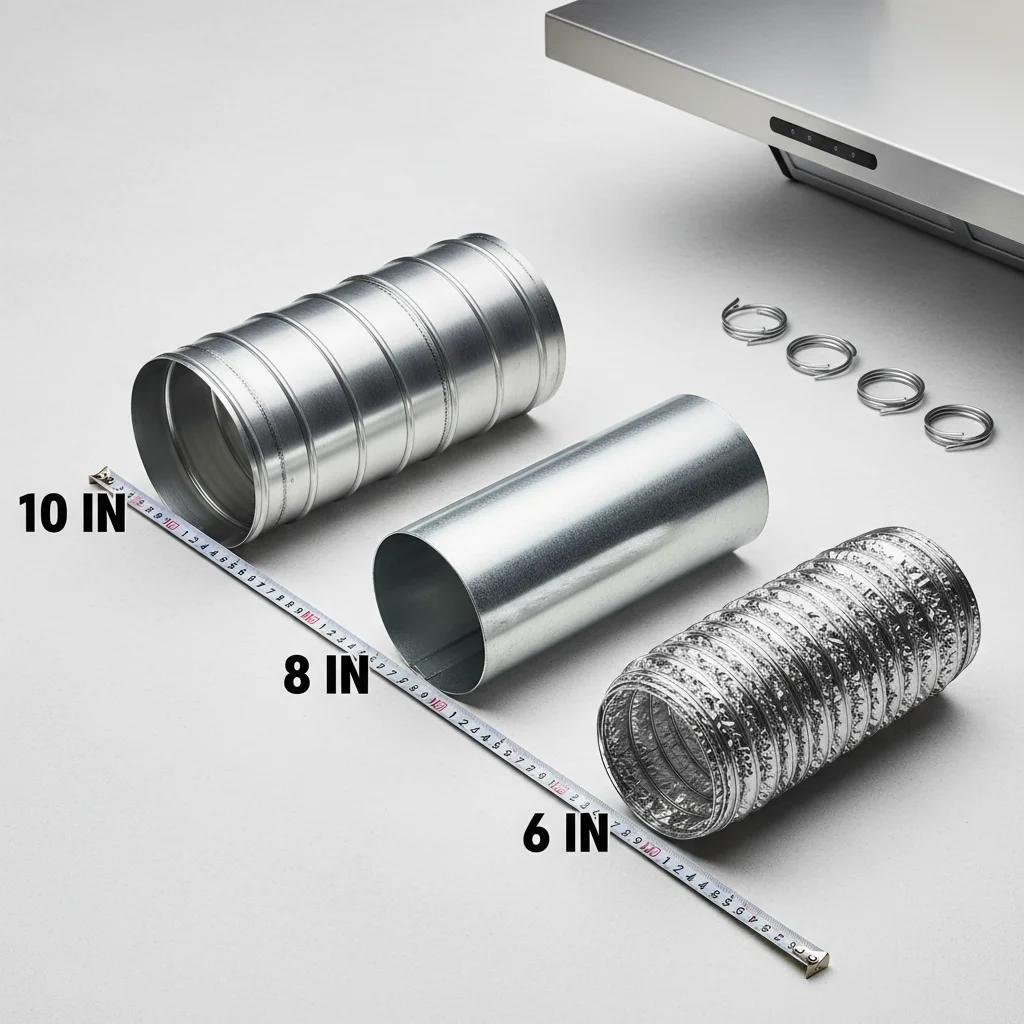
Choosing the correct range hood duct size is crucial for efficient ventilation and optimal performance. For most residential kitchens, a 6-inch diameter duct is the most common and recommended size, especially for range hoods with a CFM (Cubic Feet per Minute) rating between 300 and 600. However, the ideal duct size ultimately depends on your range hood’s CFM, the type of cooking you do, and the length and complexity of your duct run.
Understanding CFM and Duct Diameter
The CFM rating of your range hood indicates its air-moving capacity. A higher CFM means more air is being moved, which typically requires a larger duct to prevent air resistance and maintain efficiency. If your duct is too small for your range hood’s CFM, the motor will work harder, leading to increased noise, reduced effectiveness, and potential premature wear. Conversely, a duct that is too large can lead to air turbulence and reduced capture efficiency. For kitchen ventilation buying guides on this site.
For range hoods with lower CFM ratings (under 300 CFM), a 4-inch or 5-inch duct might suffice, though 6-inch is often still preferred for better airflow. For high-powered professional-style range hoods exceeding 600 CFM, an 8-inch or even 10-inch duct may be necessary to handle the volume of air effectively. Always consult your range hood’s manufacturer specifications for their recommended duct size.
Impact of Duct Length and Bends
The total length of your duct run and the number of bends significantly impact the required duct size. Each bend, especially 90-degree elbows, creates resistance and reduces airflow efficiency. A general rule of thumb is to minimize the number of bends and keep the duct run as short and straight as possible. For every 90-degree elbow, you effectively add several feet to the equivalent length of your duct run, demanding a larger diameter to compensate for the increased resistance.
Consider a scenario where a 6-inch duct is recommended for a 400 CFM range hood with a short, straight run. If your installation requires multiple bends and a long run, you might need to upgrade to an 8-inch duct to achieve the same ventilation performance. This is a critical factor often overlooked in DIY installations.
Common Duct Materials and Their Considerations
|
Our Picks for the Best Range Hood in 2026
As an Amazon Associate I earn from qualifying purchases.
|
||
| Num | Product | Action |
|---|---|---|
| 1 | Empava Ductless/Ducted Range Hood Under Cabinet 30 Inch, Touch Control, 300 CFM Plug in, Stainless Steel |

|
| 2 | AAOBOSI Range Hood 30 inch Under Cabinet,800-CFM Gesture Sensing/Touch Control/Motor Upgrade Low Noise,3 Speed Range Hood with LED Lights Exhaust Fan, Stainless Steel Kitchen Vent Hood |
|
| 3 | VIKIO HOME Wall Mount Range Hood 30 inch, 580 CFM, Ducted/Ductless Convertible, Stainless Steel Kitchen Vent Hood with 3-Speed Fan and LED Lights |
|
| 4 | AMZCHEF Under Cabinet Range Hood 30 Inch, 750CFM Stainless Steel Kitchen Stove Vent Hood 3 Speed Exhaust Fan Touch/Remote/Gesture Control LED lights Time Setting Dishwasher-Safe Baffle Filters |
|
| 5 | Broan-NuTone BCSQ130SS Three-Speed Glacier Under-Cabinet Range Hood with LED Lights ADA Capable, 1.5 Sones, 375 Max Blower CFM, 30-Inch, Stainless Steel |
|
| 6 | COSMO COS-63175S 30 in. Vista Collection 380 CFM Ducted Wall Mount Range Hood, Touch Controls, LED Lights, Stainless Steel |
|
| 7 | Wall Mount Range Hood 30 inch with Ducted/Ductless Convertible Duct, Stainless Steel Chimney-Style Over Stove Vent Hood with LED Light, 3 Speed Exhaust Fan, 450 CFM |
|
| 8 | Empava Wall Mount Range Hood 30 Inch, Ducted/Ductless Kitchen Exhaust Stove Vent with Modern Style, 400CFM, 3-Speed, Touch Control, Timer, LED Lights, Stainless Steel (Charcoal-Filter Sold Separately) |
|
| 9 | COSMO COS-5MU30 30 in. Delta Collection Ducted Under Cabinet Range Hood, Button Controls, Reusable Filters, LED Lights, Stainless Steel |
|
| 10 | Range Hood 30inch Under Cabinet, 900CFM Stainless Steel Kitchen Vent Hood with Gesture/Touch Control and Permanent Stainless Steel Filters, Ducted Vent, Top and Rear Vents |
|
The material of your ductwork also plays a role in overall performance and longevity. Smooth, rigid metal ducts (galvanized steel or aluminum) are highly recommended over flexible ducts. Flexible ducts, especially the ribbed plastic or foil types, create more air resistance due to their uneven interior surfaces, reducing airflow and making them harder to clean. If flexible ducting must be used, opt for the shortest possible length and ensure it is fully extended and taut to minimize resistance.
- Rigid Galvanized Steel: Durable, smooth interior, excellent airflow.
- Rigid Aluminum: Lighter than steel, smooth interior, good airflow.
- Semi-Rigid Aluminum: Offers some flexibility, better than fully flexible, but still has more resistance than rigid.
- Flexible Foil/Plastic: Highest resistance, should be avoided if possible, or used in very short, straight runs.
When to Consult a Professional
While understanding basic duct sizing principles is helpful, complex installations or high-CFM range hoods often benefit from professional consultation. An HVAC specialist can accurately calculate static pressure, account for all bends and length, and recommend the precise duct size and type for your specific kitchen layout and range hood. This ensures optimal performance, minimizes noise, and complies with local building codes.
Investing in the correct duct size from the outset prevents future headaches and ensures your range hood operates at its peak efficiency, effectively removing smoke, grease, and odors from your kitchen.Always double-check the manufacturer’s guidelines for your specific range hood model before making any ducting decisions.
