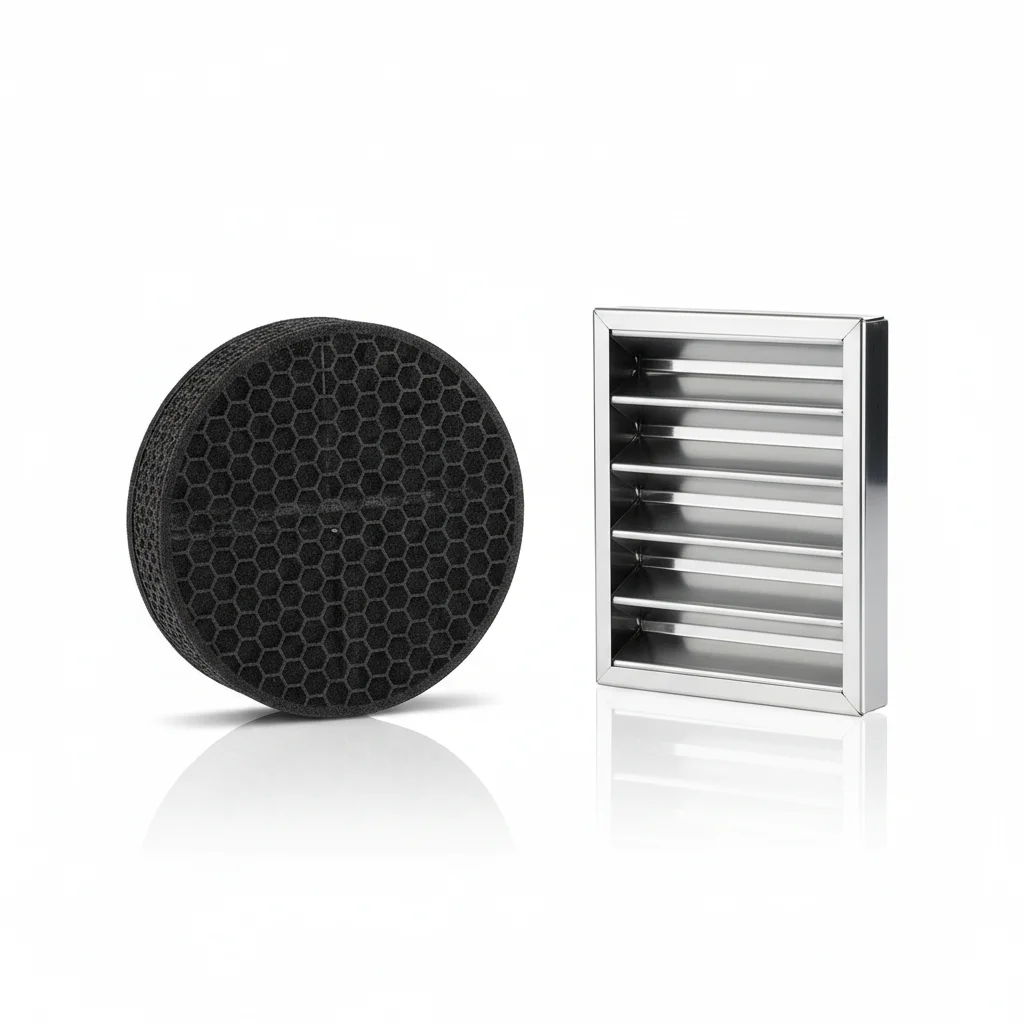
Choosing the right range hood filter is crucial for effective kitchen ventilation, and the primary contenders are carbon and baffle filters. While both serve to capture airborne contaminants, baffle filters generally offer superior long-term performance and ease of cleaning for heavy-duty cooking, whereas carbon filters excel at odor absorption, particularly in ductless setups. Understanding the distinct advantages of each will help you select the best option for your specific cooking habits and ventilation system.
Understanding Baffle Filters
Baffle filters are characterized by their interlocking metal plates, designed to create a tortuous path for grease-laden air. As the air changes direction, grease particles are forced to collide with the metal surfaces, condensing and collecting in channels. This design makes them highly efficient at capturing grease, preventing it from entering the range hood’s internal components or ductwork. They are typically made from stainless steel or aluminum, offering durability and resistance to corrosion. Their robust construction allows for frequent cleaning, often in a dishwasher, making them a low-maintenance choice for kitchens with regular, intense cooking. For complete kitchen ventilation library on this site.
The Role of Carbon Filters
Carbon filters, also known as charcoal filters, are primarily designed to absorb odors and smoke particles. They contain activated carbon granules that have a highly porous structure, providing a large surface area to trap microscopic odor molecules. These filters are essential for ductless range hoods, where air is recirculated back into the kitchen rather than vented outside. While effective at odor removal, carbon filters do not capture grease as efficiently as baffle filters and have a finite lifespan. They require periodic replacement, typically every 3 to 6 months depending on cooking frequency, as their absorption capacity diminishes over time.
Performance Comparison: Grease Capture and Odor Removal
|
Our Picks for the Best Range Hood in 2026
As an Amazon Associate I earn from qualifying purchases.
|
||
| Num | Product | Action |
|---|---|---|
| 1 | COSMO COS-5MU30 30 in. Delta Collection Ducted Under Cabinet Range Hood, Button Controls, Reusable Filters, LED Lights, Stainless Steel |

|
| 2 | Broan-NuTone BCSQ130SS Three-Speed Glacier Under-Cabinet Range Hood with LED Lights ADA Capable, 1.5 Sones, 375 Max Blower CFM, 30-Inch, Stainless Steel |
|
| 3 | Empava Ductless/Ducted Range Hood Under Cabinet 30 Inch, Touch Control, 300 CFM Plug in, Stainless Steel |
|
| 4 | COSMO COS-63175S 30 in. Vista Collection 380 CFM Ducted Wall Mount Range Hood, Touch Controls, LED Lights, Stainless Steel |
|
| 5 | VIKIO HOME Wall Mount Range Hood 30 inch, 580 CFM, Ducted/Ductless Convertible, Stainless Steel Kitchen Vent Hood with 3-Speed Fan and LED Lights |
|
| 6 | Wall Mount Range Hood 30 inch with Ducted/Ductless Convertible Duct, Stainless Steel Chimney-Style Over Stove Vent Hood with LED Light, 3 Speed Exhaust Fan, 450 CFM |
|
| 7 | AAOBOSI Range Hood 30 inch Under Cabinet,800-CFM Gesture Sensing/Touch Control/Motor Upgrade Low Noise,3 Speed Range Hood with LED Lights Exhaust Fan, Stainless Steel Kitchen Vent Hood |
|
| 8 | Range Hood 30inch Under Cabinet, 900CFM Stainless Steel Kitchen Vent Hood with Gesture/Touch Control and Permanent Stainless Steel Filters, Ducted Vent, Top and Rear Vents |
|
| 9 | AMZCHEF Under Cabinet Range Hood 30 Inch, 750CFM Stainless Steel Kitchen Stove Vent Hood 3 Speed Exhaust Fan Touch/Remote/Gesture Control LED lights Time Setting Dishwasher-Safe Baffle Filters |
|
| 10 | Empava Wall Mount Range Hood 30 Inch, Ducted/Ductless Kitchen Exhaust Stove Vent with Modern Style, 400CFM, 3-Speed, Touch Control, Timer, LED Lights, Stainless Steel (Charcoal-Filter Sold Separately) |
|
When it comes to grease capture, baffle filters are the undisputed champions. Their mechanical design physically separates grease from the airflow, making them ideal for kitchens with frequent frying, searing, or wok cooking. Carbon filters, on the other hand, have minimal grease-capturing capabilities and are often used in conjunction with a mesh or baffle filter to protect the carbon from premature saturation. For odor removal, carbon filters are superior. They actively neutralize and absorb cooking smells, which baffle filters cannot do. Therefore, the choice often depends on whether your primary concern is grease management or odor control.
Maintenance and Longevity
Maintenance is a significant factor in filter selection. Baffle filters are remarkably easy to clean; they can be wiped down by hand or placed in a dishwasher, restoring their full efficiency. With proper care, baffle filters can last for many years, often for the lifetime of the range hood. Carbon filters, however, are not washable and must be replaced regularly. The frequency of replacement depends on how often you cook and the types of food you prepare. Neglecting to replace carbon filters will lead to diminished odor absorption and potentially reduced airflow. Consider the long-term cost and environmental impact of disposable filters versus reusable ones.
Which Filter is Right for Your Kitchen?
The best filter type for your kitchen largely depends on your range hood’s ventilation system and your cooking habits. If you have a ducted range hood that vents outside and you frequently cook greasy foods, baffle filters are the most efficient and cost-effective choice. They provide excellent grease capture and are easy to maintain. If you have a ductless range hood, or if odor control is your primary concern, carbon filters are indispensable. Many ducted range hoods also offer the option to add a carbon filter for enhanced odor removal, even if they primarily use baffle or mesh filters for grease. For optimal performance, some advanced range hoods combine both technologies.
- For heavy grease production, choose baffle filters.
- For effective odor removal, especially in ductless systems, carbon filters are essential.
- Consider a combination of both for comprehensive air purification.
- Evaluate long-term maintenance costs and replacement frequency.
- Ensure the filter type is compatible with your specific range hood model.
Ultimately, the decision between carbon and baffle filters, or a combination thereof, should align with your kitchen’s ventilation setup and your culinary needs. For a wide selection of high-quality baffle filters suitable for various range hood models, check out. If you’re looking for replacement carbon filters to keep your kitchen smelling fresh, explore the options available at.

I’ve always struggled with grease buildup in my old mesh filters, and after reading about baffle filters here, I decided to upgrade. What a difference! Cleaning is so much easier now, and I can actually see the grease collecting in the channels instead of just clogging everything up. Definitely worth the investment for anyone who cooks a lot.
My kitchen is ductless, so odor absorption is a huge deal for me. I’ve been using carbon filters for a while, and they really do a great job with strong cooking smells. I do wish they lasted a bit longer before needing replacement, but for the fresh air they provide, it’s a trade-off I’m willing to make.
I was hoping the baffle filters would be a complete game-changer for my heavy-duty cooking, but I’m still getting some grease escaping into the ductwork. They’re definitely better than the old mesh ones, and cleaning is a breeze, but I expected a bit more efficiency in capturing everything. Maybe my setup just needs a stronger fan too.
This information was so helpful! I was torn between carbon and baffle filters for my new range hood. Knowing that baffle filters are better for long-term performance and ease of cleaning for heavy cooking really sealed the deal for me. My kitchen stays so much cleaner now, and I don’t have to worry about constantly replacing filters.