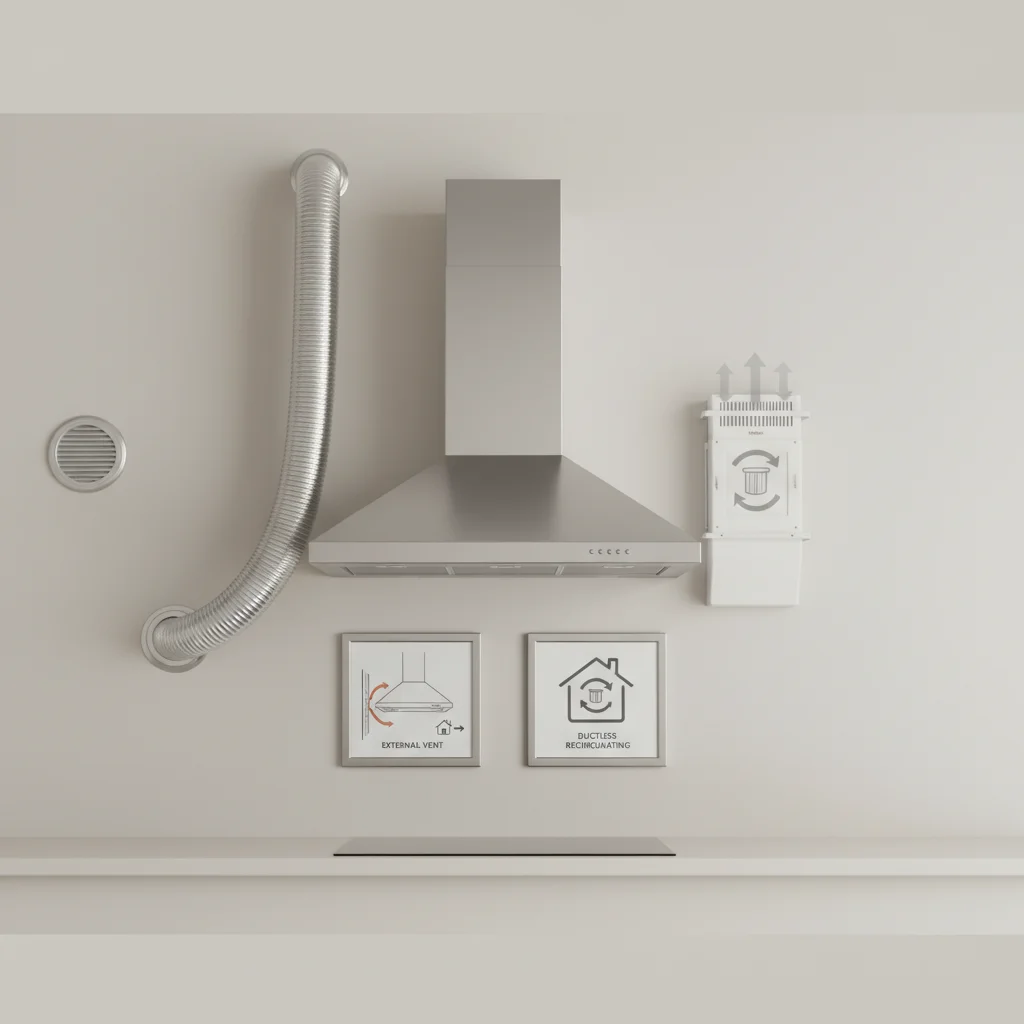
Choosing the right range hood venting option is crucial for effective kitchen air purification. There are primarily three main methods for venting a range hood: ducted through an exterior wall, ducted through the roof, and ductless (recirculating). Each method offers distinct advantages and disadvantages depending on your kitchen layout, building structure, and local climate. Understanding these differences will help you select the most efficient and suitable system for your home.
Venting Through an Exterior Wall: The Most Common Ducted Approach
Venting a range hood through an exterior wall is often the most straightforward and cost-effective ducted solution. This method involves running a duct from the range hood directly through an exterior wall to the outside. It’s ideal for kitchens located on an exterior wall, minimizing the length of ductwork required. Shorter duct runs mean less air resistance, leading to better airflow and quieter operation. This approach effectively removes smoke, grease, and odors from your home, preventing them from recirculating indoors.
However, proper sealing and insulation of the wall penetration are essential to prevent energy loss and moisture intrusion. Consider the aesthetic impact of the exterior vent cap on your home’s facade.
Venting Through the Roof: An Option for Interior Kitchens
For kitchens not situated on an exterior wall, or for island range hoods, venting through the roof is a viable ducted alternative. This method routes the ductwork up through the ceiling, into the attic space, and then out through a roof vent. While it offers excellent ventilation performance, similar to exterior wall venting, it typically involves more complex installation. The duct run is often longer, which can slightly increase noise levels and reduce airflow efficiency if not properly designed.
Roof venting requires careful consideration of roof pitch, flashing, and sealing to prevent leaks. It’s crucial to ensure the ductwork in the attic is insulated to prevent condensation, especially in colder climates. This option is particularly common for island range hoods where wall access is not feasible.
Ductless (Recirculating) Range Hoods: A Solution for Limited Spaces
|
Our Picks for the Best Range Hood in 2026
As an Amazon Associate I earn from qualifying purchases.
|
||
| Num | Product | Action |
|---|---|---|
| 1 | Wall Mount Range Hood 30 inch with Ducted/Ductless Convertible Duct, Stainless Steel Chimney-Style Over Stove Vent Hood with LED Light, 3 Speed Exhaust Fan, 450 CFM |

|
| 2 | AMZCHEF Under Cabinet Range Hood 30 Inch, 750CFM Stainless Steel Kitchen Stove Vent Hood 3 Speed Exhaust Fan Touch/Remote/Gesture Control LED lights Time Setting Dishwasher-Safe Baffle Filters |
|
| 3 | VIKIO HOME Wall Mount Range Hood 30 inch, 580 CFM, Ducted/Ductless Convertible, Stainless Steel Kitchen Vent Hood with 3-Speed Fan and LED Lights |
|
| 4 | COSMO COS-5MU30 30 in. Delta Collection Ducted Under Cabinet Range Hood, Button Controls, Reusable Filters, LED Lights, Stainless Steel |
|
| 5 | Empava Ductless/Ducted Range Hood Under Cabinet 30 Inch, Touch Control, 300 CFM Plug in, Stainless Steel |
|
| 6 | Empava Wall Mount Range Hood 30 Inch, Ducted/Ductless Kitchen Exhaust Stove Vent with Modern Style, 400CFM, 3-Speed, Touch Control, Timer, LED Lights, Stainless Steel (Charcoal-Filter Sold Separately) |
|
| 7 | AAOBOSI Range Hood 30 inch Under Cabinet,800-CFM Gesture Sensing/Touch Control/Motor Upgrade Low Noise,3 Speed Range Hood with LED Lights Exhaust Fan, Stainless Steel Kitchen Vent Hood |
|
| 8 | COSMO COS-63175S 30 in. Vista Collection 380 CFM Ducted Wall Mount Range Hood, Touch Controls, LED Lights, Stainless Steel |
|
| 9 | Range Hood 30inch Under Cabinet, 900CFM Stainless Steel Kitchen Vent Hood with Gesture/Touch Control and Permanent Stainless Steel Filters, Ducted Vent, Top and Rear Vents |
|
| 10 | Broan-NuTone BCSQ130SS Three-Speed Glacier Under-Cabinet Range Hood with LED Lights ADA Capable, 1.5 Sones, 375 Max Blower CFM, 30-Inch, Stainless Steel |
|
Ductless range hoods, also known as recirculating hoods, do not vent air outside. Instead, they filter the air through charcoal filters to remove odors and some grease, then release the cleaned air back into the kitchen. This option is ideal for apartments, condos, or kitchens where installing external ductwork is impossible or prohibitively expensive. They are also simpler and less costly to install as they don’t require any exterior modifications.
While convenient, ductless systems are generally less effective at removing heat and moisture compared to ducted systems. The charcoal filters require regular replacement, typically every 3-6 months, to maintain their effectiveness. They are a good compromise when external venting is not an option, but they don’t offer the same level of air purification as ducted models.
Key Considerations When Choosing Your Venting Method
When deciding between these options, several factors should influence your choice:
- Kitchen Layout: Is your range on an exterior wall or an interior wall/island?
- Building Structure: Are there existing ducts? Is attic access easy?
- Installation Cost: Ducted systems generally cost more to install due to labor and materials.
- Performance Needs: How much cooking do you do? Do you frequently cook greasy or strong-smelling foods?
- Climate: In very cold or hot climates, proper insulation of ductwork is critical.
Ultimately, a ducted system, whether through a wall or roof, provides superior ventilation performance by completely removing contaminants from your home. However, ductless systems offer a practical solution for situations where external venting is not feasible.
Maintaining Your Chosen Venting System
Regardless of the venting method you choose, regular maintenance is key to ensuring optimal performance and longevity. For ducted systems, periodically check the exterior vent cap for obstructions like bird nests or debris. Clean grease filters regularly, typically monthly, to prevent buildup that can restrict airflow. For ductless systems, adhere to the manufacturer’s recommendations for charcoal filter replacement to ensure effective odor absorption. Proper maintenance will keep your kitchen air fresh and your range hood operating efficiently for years to come.

We just renovated our kitchen and decided to go with the ducted through an exterior wall option, as suggested. It was definitely the most straightforward for our layout. The difference in air quality when I’m cooking is amazing, especially with all the stir-frying we do. No more lingering smells!
As someone who cooks daily, having proper ventilation is key. I appreciated the breakdown of how each method works. We have a kitchen on an interior wall, so the roof venting option was perfect for us. It’s been incredibly effective at removing grease and odors, keeping my kitchen much cleaner.
I was really torn between ducted and ductless, but after reading up on the efficiency, I went with a ducted system through the roof. Installation was a bit more involved than I expected, but it was worth it for how well it clears out steam and smoke. My only minor complaint is the noise level on the highest setting.
My apartment building doesn’t allow external venting, so I had to go with a ductless recirculating range hood. It’s okay for light cooking, but I find it doesn’t quite keep up when I’m making something really fragrant like curries. I wish it filtered out the strong smells a bit better, even with regular filter changes.